
KOLOT – Voices of Hope, Post-October 7 Series
Zazim: Mobilizing Hundreds of Thousands Israeli Progressives
By Raluca Ganea
In the first days of Israel’s war with Iran, a missile hit the Tel Aviv building where Zazim’s small office is located. The office was completely destroyed. Since then, we have been working from home — meeting online every morning, and, in between rushes to bomb shelters, searching for new ways to turn despair into action.
One of our first initiatives was a webinar bringing together Israelis and Iranian diaspora members — to show that the two peoples are not born enemies, to refuse the logic of war, and to rehumanize. We also joined a coalition of organizations calling to end Israel’s “forever war” and reach an immediate ceasefire.
Zazim is the largest political campaigning community in Israel, promoting active civic engagement in issues across the progressive spectrum: from peace and democracy to gender rights and the environment. Recent years have taught us that, even at times of national emergency, our work mustn’t stop.
The morning of September 11, 2023, offers a glimpse into where we come from. That day, our members stood at the forefront of a massive protest outside the Supreme Court, joining tens of thousands gathered to stop the “judicial overhaul” (the Netanyahu government’s effort to expand political control over courts and limit their ability to check executive power). An incredible 175,000 people—nearly two percent of Israel’s entire population—had signed Zazim’s petition in support of the court, calling for the reversal of legislation that threatened to strip away its powers.
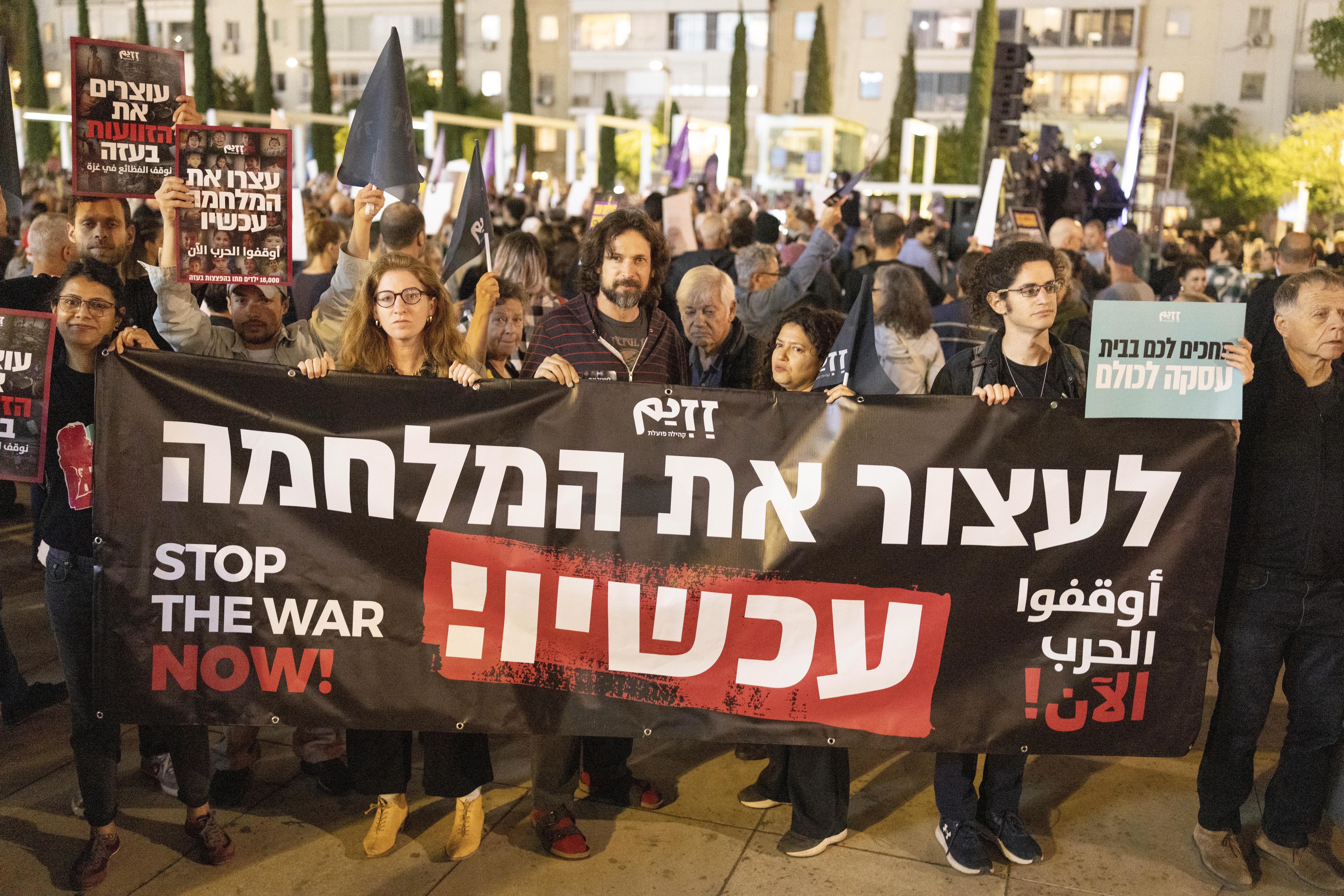
It was a day that felt like the ultimate expression of civic energy. But just one year later, the world had changed completely. We found ourselves navigating a much darker, fractured landscape. Against the backdrop of the October 7th trauma and then a war of annihilation in Gaza, we initiated campaigns that challenged even our own community. Zazim members spoke out against the policy of starvation, demanded accountability for war crimes, fought settler violence, and helped sustain the ongoing protest to end the war and secure a hostage deal.
This work represented the core of Zazim’s identity: a movement built around mobilizing the masses while simultaneously leading and challenging the Israeli political discourse.
Zazim (“moving” in Hebrew) is not your typical social change NGO. While traditional organizations often rely on the specialized work of a small professional staff, Zazim, at its heart, is a mobilization operation. Our strength lies in being an inclusive home for anyone—not just “professional activists”—who want to reclaim their agency during times of crisis. Our unique value lies in our ability to turn the passive concern of individuals into active, collective power. We do this by blending advanced digital campaigning with traditional “boots-on-the-ground” activism.
Our community now exceeds 400,000 members, Jews and Arabs,and some supporters from abroad. They sign petitions, write to elected officials, take to the streets, and fund our work. Because 90 percent of our budget comes from micro-donations, a campaign only takes off if enough members are willing to chip in. This simple fact alone makes our agenda a direct reflection of our members’ will.
Zazim’s model is inspired by MoveOn.org, and we are part of an international network of similar movements, called NODE, the Network of Democratic Entities. The battle against right-wing populism is global; we often find ourselves facing the same authoritarian tendencies as our counterparts in Serbia or Hungary, while our friends in Germany look to our experience in fighting the rise of openly racist parties.
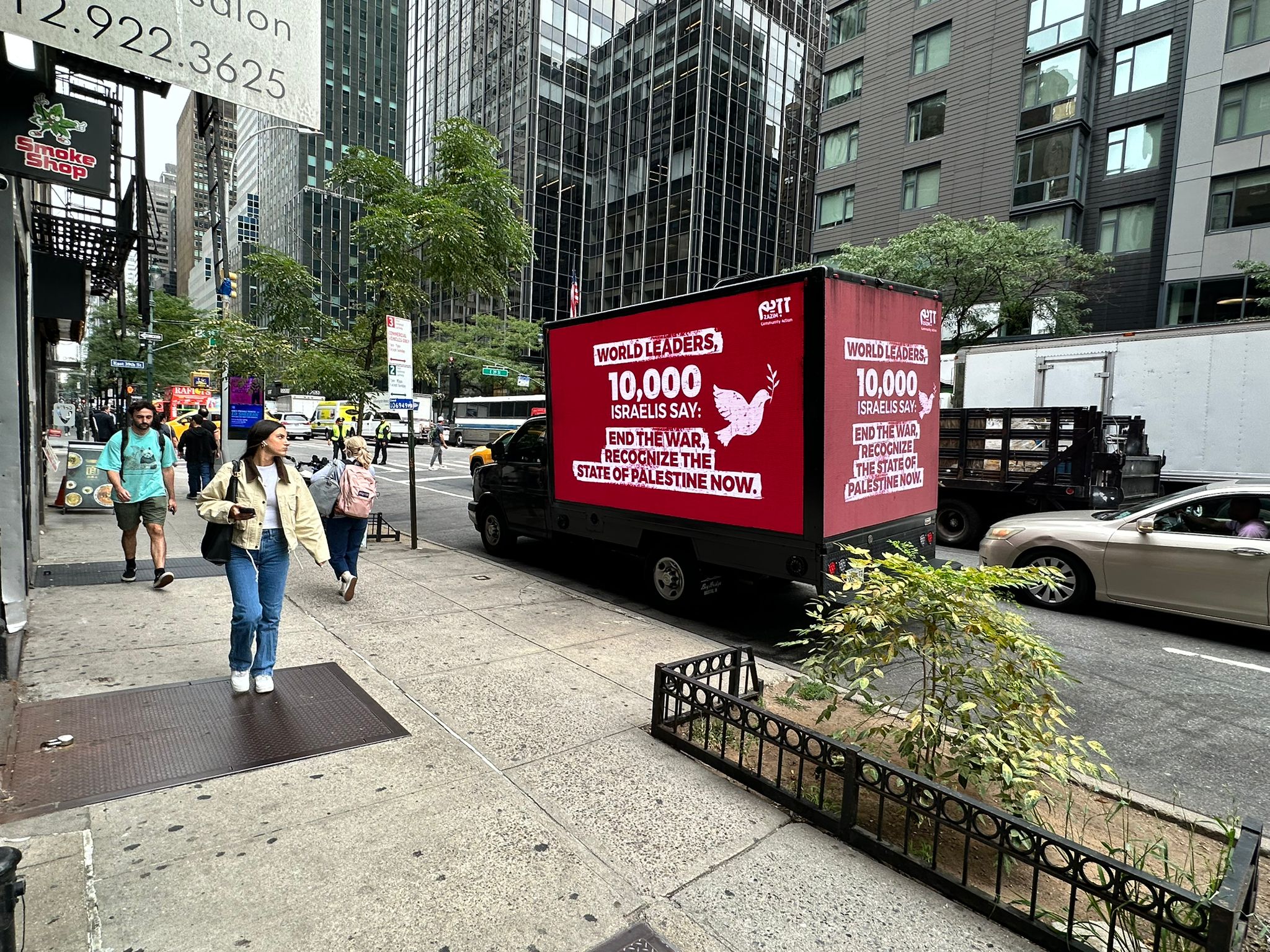
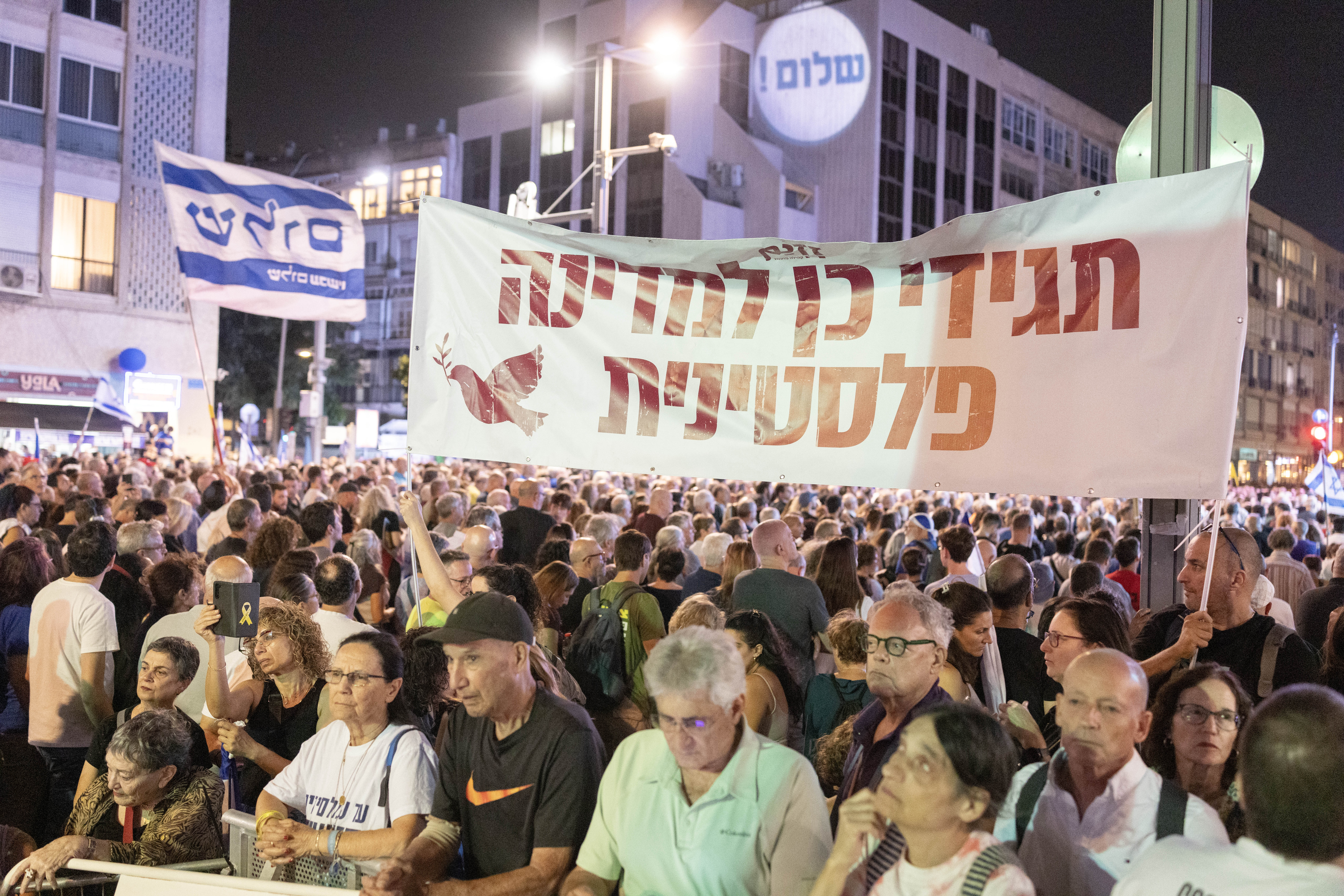
The past year alone can demonstrate the scope of our work. As 2025 brought some of the darkest moments of the Gaza war, we hung posters across Israel protesting the government’s policy of starvation and distributed half a million leaflets urging reservists to refuse war crimes and disobey illegal orders. When diplomacy finally took center stage, we supported the international initiative to recognize a Palestinian State. Our members funded a massive billboard in support of the initiative on a central Tel Aviv highway, and we hand-delivered 10,000 signatures to French President Macron during the UN General Assembly last fall. If you were in New York City, you might have even seen our mobile billboards calling for peace and recognition.
It was later reported that this Saudi-French-led initiative played a role in nudging the Trump administration to unveil its own peace plan, fearing that international forces would otherwise take the lead. Grassroots Israeli support is crucial for legitimizing such efforts, and we take pride in doing our share to bring about a lasting ceasefire. Still, this was only a first step, and the humanitarian crisis in Gaza remains dire. As I write these words, millions are freezing in tents; so, our latest petition is demanding a humanitarian corridor to allow those in Gaza seeking urgent medical treatment to receive it abroad.
Zazim is also a leading member of “It’s Time”, a coalition of over 60 peacebuilding and shared society organizations, working together to end the Israeli-Palestinian conflict through a political agreement that will ensure both peoples’ right to self-determination and secure lives.
There are other urgent fronts, too. Each month, a busload of Zazim members travels to the West Bank to support Palestinian farmers facing IDF restrictions and settler violence. Early this year, we planted 200 olive saplings in Nahalin, the West Bank. Beyond supporting communities on the ground, such activities expose more Israelis to the reality of the occupation, often turning first-time volunteers into lifelong activists.
The fight for Israeli democracy remains our bedrock. Following President Trump’s interference in the Israeli legal system—demanding a pardon for the currently-on-trial Prime Minister Netanyahu, and even threatening retribution—we collected 20,000 formal objections, which we submitted to the Israeli President’s Office in Jerusalem. Under Israeli law, President Herzog must consider these statements by Israeli citizens before making a decision on pardoning the prime minister. Meanwhile, our most successful petition this year called for a State Commission of Inquiry into the events of October 7th, joining the families of victims and hostages in demanding real accountability.
Netanyahu’s government is also engaged in a systematic pushback against women’s rights, and in suppressing the political rights of Palestinian citizens. We recently launched a campaign against legislation that would allow gender segregation in academia and public spaces, such as libraries—a move that threatened to unravel decades of progress toward equality. (The public outcry led the government to scale down some of the most outrageous aspects of the new law.) Additionally, we are supporting Israel’s Attorney General, Gali Baharav-Miara, in demanding Itamar Ben-Gvir, Minister of National Security, be fired from the government immediately for abusing the powers of his post.
Amidst the heavy news cycle of 2025, there were also real moments of joy. We saw heartwarming successes against inhumane anti-immigration efforts: A petition for 15-year-old Louie, born to Filipino migrant workers in Israel, succeeded in reversing her deportation and granting her permanent residency. Even more incredible was our campaign for the African Hebrew Israelites. After decades of living in Israel, this community faced the threat of immediate expulsion. Zazim members supported the Israelites in public rallies, signed petitions for their cause, and even financed legal proceedings. Just recently we learned that the collective mobilization won the Hebrew Israelites the right to stay.
The coming year will demand even more from us. With the Israeli elections approaching, we anticipate a political climate unlike anything we have ever experienced. Prime Minister Netanyahu’s fight for political survival, compounded by his ongoing trial and the hard-right’s tightening grip on law enforcement under Minister Ben-Gvir, sets the stage for a high-stakes battle over the very soul of our country. We are anticipating government efforts to disqualify Palestinian-Israeli candidates and systemic attempts at voter suppression. Already we are strategizing on the most effective ways to push back, for example through physical presence at polling stations, or by pressuring the Jewish opposition to stand by the Palestinian-led parties.
Yet we are under no illusions: our work won’t end even if the current government falls. In a post-Netanyahu era, the voices of progressives in Israel must be louder than ever to ensure that a change in leadership translates into a change in reality. We will continue to stand with disenfranchised communities, combat the deep-seated authoritarian tendencies that have taken root, and remain the most consistent advocates for peace and an immediate end to the Occupation.
We will soon reopen our office. Despite the headwinds we are facing, we feel incredibly lucky to have the opportunity to do this work. When the news cycle feels designed to paralyze us with despair, at Zazim we reach out to our community, organize, and do something about it.
To learn more about Zazim, please follow us on Instagram, Facebook, and Twitter, or visit our website, where you can also support any of the campaigns mentioned in this piece.
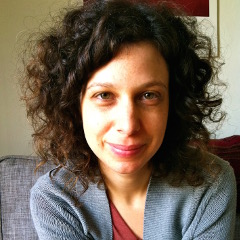
Raluca Ganea is the co-founder and executive director of Zazim.
Leave A Comment