
INSIGHTS
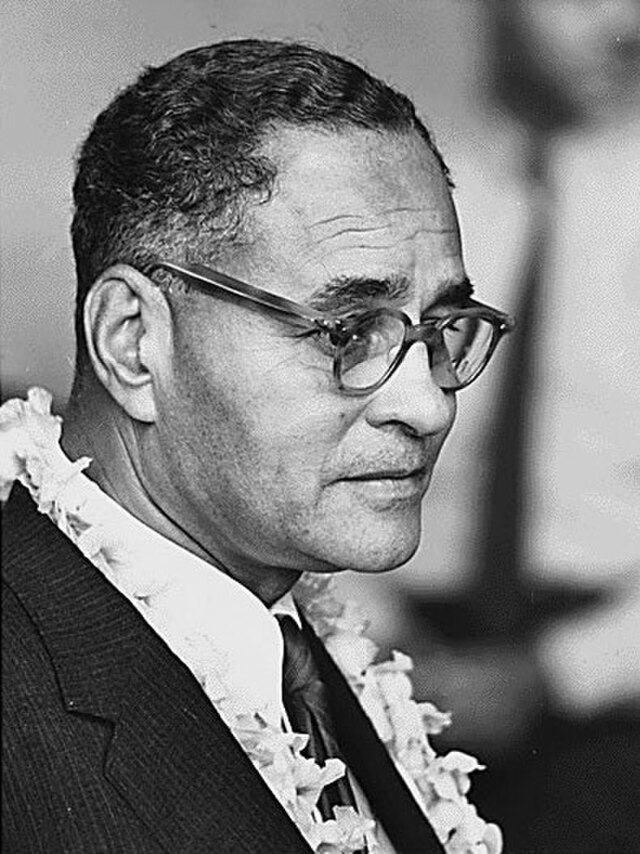
Ralph Bunche, the UN’s Forgotten Champion
By Joseph Hillyard
In January of this year, the United Nations celebrated a major milestone: Eighty years earlier, in Blitz-scarred London, representatives of 51 nations had gathered for the first ever United Nations General Assembly to discuss plans for the postwar world. Advocates hoped that the UNGA could be a forum for diplomacy between nations, and prevent future conflict. The United States was an active participant in the gathering, with former First Lady Eleanor Roosevelt, a member of the US delegation, addressing the assembly and appealing for gender equality.
Over the eight decades since, the UN has expanded in both membership and mandates – yet the future of the organization’s role in international affairs seems more unclear than ever. The inability of the UN to diplomatically resolve conflicts in Ukraine, Israel-Palestine, Haiti, Sudan, and now Iran has increased skepticism of the organization’s efficacy. And the US under Donald Trump has embraced a transactional approach to foreign policy, eschewing international law and institutions, and possibly even angling to replace the UN entirely with a “Board of Peace”. These mounting crises have led human rights advocates to fear a “new age of impunity”, in which political and military leaders are no longer held accountable for the atrocities they commit.
But while the UN, since its inception, has become a household name, the individuals who have contributed to the institution are lesser known.
Kal Raustiala, director of the Ronald W. Burkle Center for International Relations at UCLA, aims to correct this oversight with his biography of UN diplomat and civil rights activist, Ralph Bunche. Bunche, the first Black man to win the Nobel Peace Prize for negotiating the end of the first Arab-Israeli war, has long been treated as a historical footnote. Published in 2022 by Oxford University Press, The Absolutely Indispensable Man: Ralph Bunche, the United Nations, and the Fight to End Empire rectifies this, tracing the life of the man and of the organization he helped shape.
Born at the start of the Great Migration, Bunche would grow up amidst a time of significant transition for African Americans, as many left the Jim Crow South for economic opportunities in Northern cities. Born in Detroit, he would primarily grow up in Los Angeles, raised by his maternal grandmother, Lucy Taylor Johnson, after his mother died; his father had deserted the family years earlier. Bunche would credit his grandmother with encouraging his academic pursuits and instilling him with a strong sense of racial pride.
Recognized for his academic prowess at a young age, Bunche would graduate valedictorian of his high school and at UCLA. He would later become the first African American to get a PhD in political science from Harvard. He received his masters from Howard University, where he taught for many years. Through his education, Bunche would become drawn to international affairs, emerging as a major scholar on colonialism.
In his 1934 dissertation, “French Administration in Togoland and Dahomey,” Bunche criticized the Mandate system of the League of Nations as indistinguishable from formal colonial rule. He would get to develop his ideas further during the Second World War, when his knowledge of African and colonial affairs was sought out by the federal government. In the later stages of the war, he would find himself working alongside Eleanor Roosevelt, who became a lifelong friend and ally, developing plans for what would become the United Nations. Raustiala notes that Bunche pushed for Black civil rights groups to take an active role in the UN, drawing connections between the struggle against Jim Crow and the struggle against empire.
To replace the Mandate system, Bunche developed the idea of UN trusteeship, which aimed to promote self-determination and weaken the hold of colonial powers. It was this role that would bring him to the Middle East, where the UN-backed partition of the British Mandate for Palestine had resulted in the first Arab-Israeli war.
Bunche was not supposed to be the UN’s chief mediator in the Middle East. Sweden’s Count Folke Bernadotte was appointed to that role. Bunche served as his chief aide and supported Bernadotte in his tense negotiations with Israeli and Arab leaders. When Bernadotte was assassinated by the Jewish terrorist group, Lehi (led by future prime minister Yitzhak Shamir), which opposed the negotiations, Bunche was immediately appointed in his stead.
Bunche regarded these negotiations as among the hardest of his diplomatic career, and many of his observations about the Israeli-Palestinian conflict would prove prophetic. While he would be chastised by Arab leaders as too close to the Jewish community during negotiations, Bunche was vocal about the plight of Palestinian refugees and later supported the 1949 creation of UNRWA, the United Nations Relief and Works Agency for Palestine Refugees in the Near East. Although his longtime professional foe, W.E.B Dubois – a passionate supporter of Israel’s establishment – publicly suggested that he was antisemitic, Bunche in practice was outspoken against antisemitism throughout his life and never disputed the right of Jews to a homeland after the horrors of the Holocaust.
Bunche believed that a solution to the Palestinian refugee question and granting self-determination to both Jews and Palestinians were necessary to achieve a lasting peace. For the rest of his life, he would not shrink from criticizing all parties for actions that undermined this vision. Despite the criticisms, when the armistice was reached in 1949 there was almost unanimous praise for his efforts, on account of which Bunche would become the first Black person to be awarded the Nobel Prize for Peace.
This achievement would grant Bunche a rare status within a segregated society. In the 1950s, he would be held up as a symbol of Black patriotism and success despite the indignities of Jim Crow. Like his friend and contemporary Jackie Robinson, this would later make Bunche seem out of touch to sixties radicals, who eschewed respectability politics. Yet he would also embrace the new generation, joining Dr. Martin Luther King Jr. at the March on Washington and in Selma.
In 1957, Bunche would be appointed United Nations Under-Secretary for Special Political Affairs and would oversee UN peacekeeping missions in Africa, Asia, and the Middle East. Conscious of the UN being a relatively new institution, he would work to build up credibility and emphasized partnership with member states. In this role, Bunche would put his longtime advocacy for decolonialism into action, navigating often fraught political dynamics. The Congo crisis, where the UN struggled to mediate between the warring factions, would be an especially harrowing episode for the aging diplomat.
Decolonization would also heighten tensions between the UN General Assembly and the Security Council, dominated, as it was and is, by former colonial powers. Despite this, Bunche would remain a firm believer in the UN and ending colonialism, rebuking critics like Richard Nixon, who had accused the organization of anti-American sentiment due to growing opposition to the war in Vietnam. Mounting health problems would force Bunche to step back from the UN, and he would pass away on December 9, 1971, from complications related to heart disease and diabetes.
The strength of Raustiala‘s biography lies not just in its ability to rehabilitate Bunche after years of neglect, but in capturing the world he occupied. He came of age during Jim Crow and empire, joining an institution that represented a potential path to democratization. The book imparts the reader with warnings about the risk of now returning to an age of impunity. As Bunche’s colleague, UN Secretary-General Dag Hammarskjöld, said in 1954: “The United Nations was not created in order to bring us to heaven, but in order to save us from hell.” Eight decades after its founding, that mission remains more essential than ever.
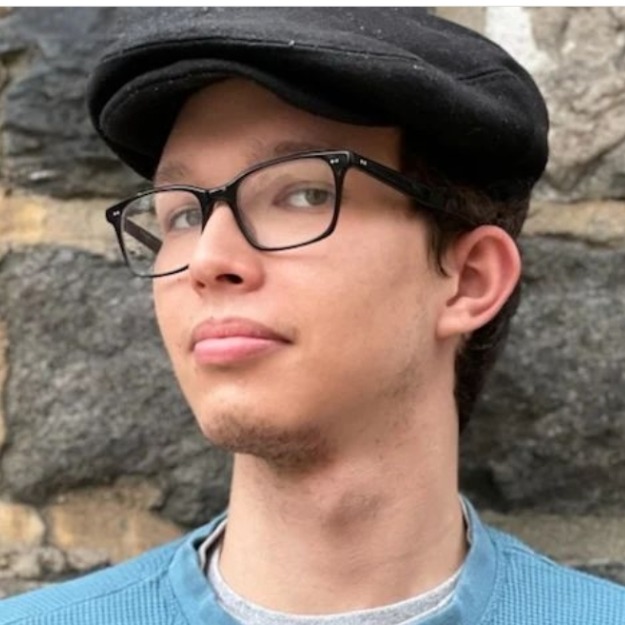
Joseph Hillyard is a Dramatic Writing Major and History Minor studying at NYU (2026). He is currently serving as VP for the Mid-Atlantic on the national board of J Street U, and was proud to be a member of the Hatikvah Slate for the 2025 World Zionist Congress Elections.
Leave A Comment