
August 25, 2026
by Abby Allen
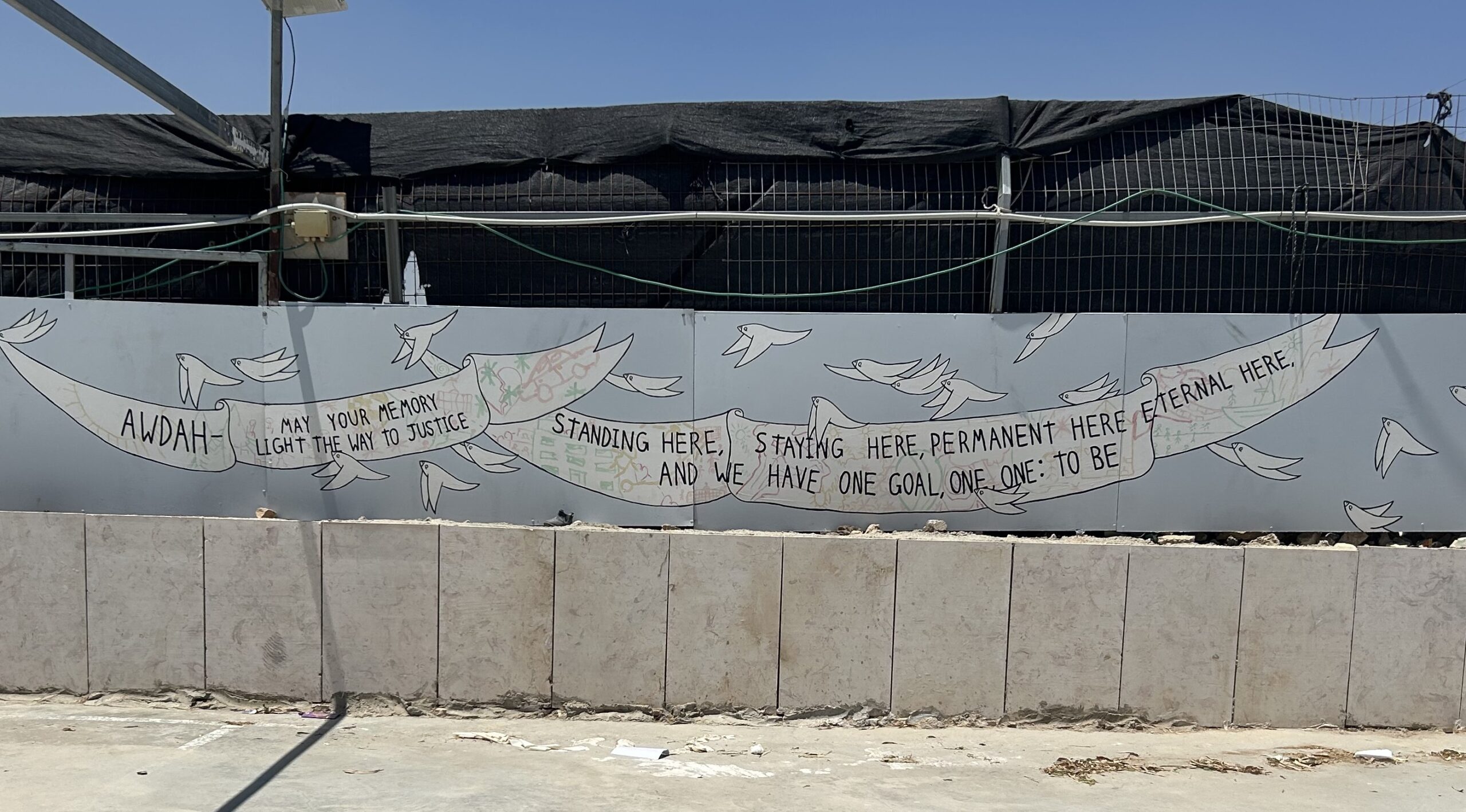
Eight of us sit around a table in the village of Umm al-Khair’s library, lights off, quietly chanting Eicha, the traditional text read on Tisha b’av. Eicha is the text that mourns and recounts the destruction of the Temple in Jerusalem. I am trying to hold the complexity of what it means to do Judaism in a place where Judaism has been weaponized to create constant violence and devastation. We sit in the library dedicated to Awdah Hathaleen, who was murdered last July by Israeli settler Yinon Levi, standing on the basketball court holding his son. We will attend Awdah’s memorial a week later, and it will be stormed by the Israeli military in an attempt to shut it down.
But tonight we chant:
איכה ישבה בדד העיר רבתי עם
How does a city sit alone, that was full of people?
We know that in the morning, settlers will be escorted by the Israeli Military through the village of Tuwani to chant those same words. Tuwani, where days earlier settlers from the illegal outpost of Havat Ma’on set the village on fire, including the Al-Taqwa Mosque, spray painting Stars of David across the walls.
This is the summer before my fourth year of rabbinical school. I hold this complexity because these experiences and these questions will continue to haunt me after I leave the land. Holidays, rituals, and symbols that I find meaningful are being weaponized against Palestinian communities. I hold this complexity because Tisha b’av has served as a meaningful moment to mourn the brokenness of our world. A day to let myself feel deep grief in order to prepare for the High Holidays. A day to think about what role I want to play in putting some of the broken pieces together. This summer was a reminder of the difficult task of holding these uncomfortable contradictions.
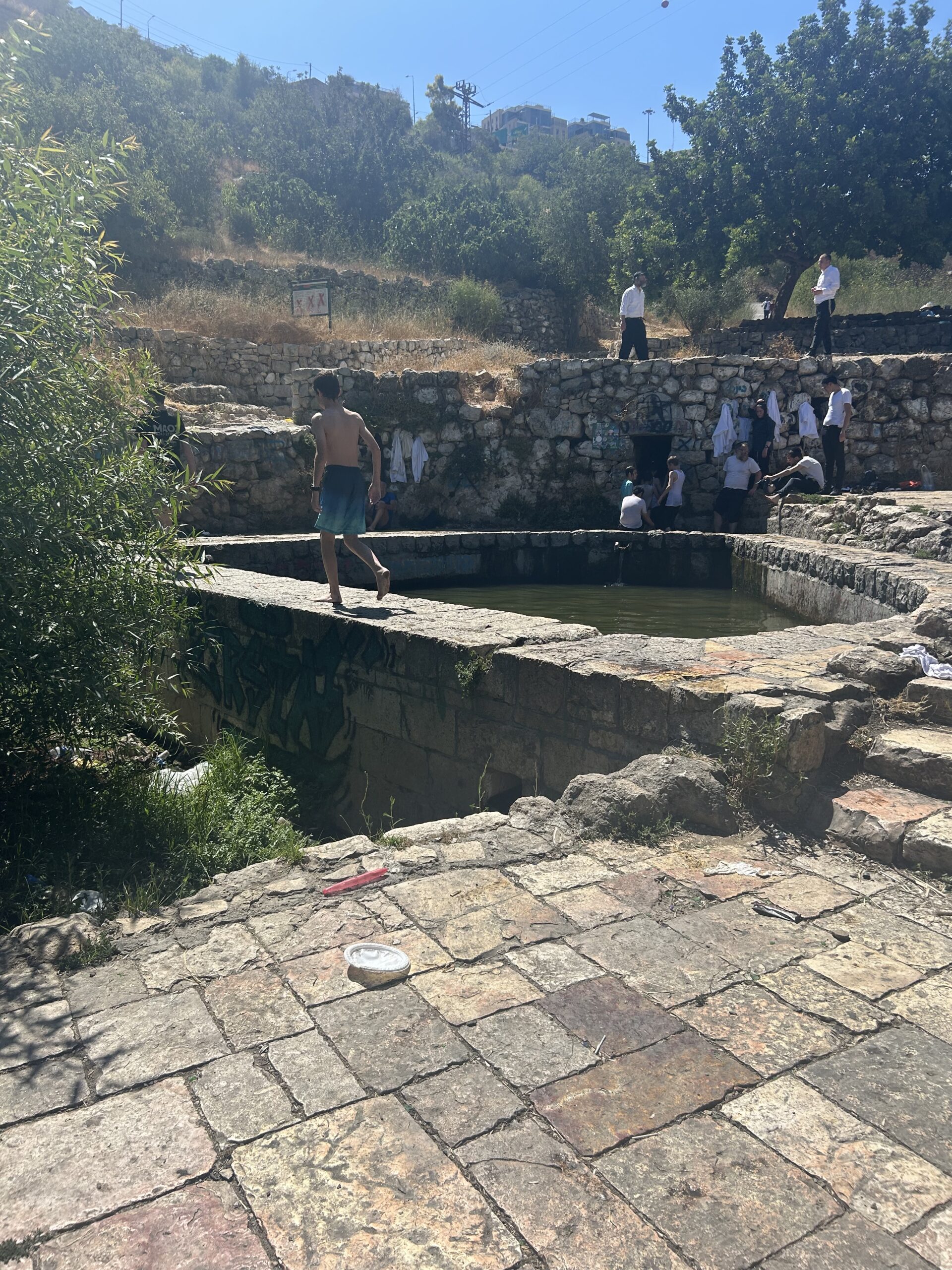
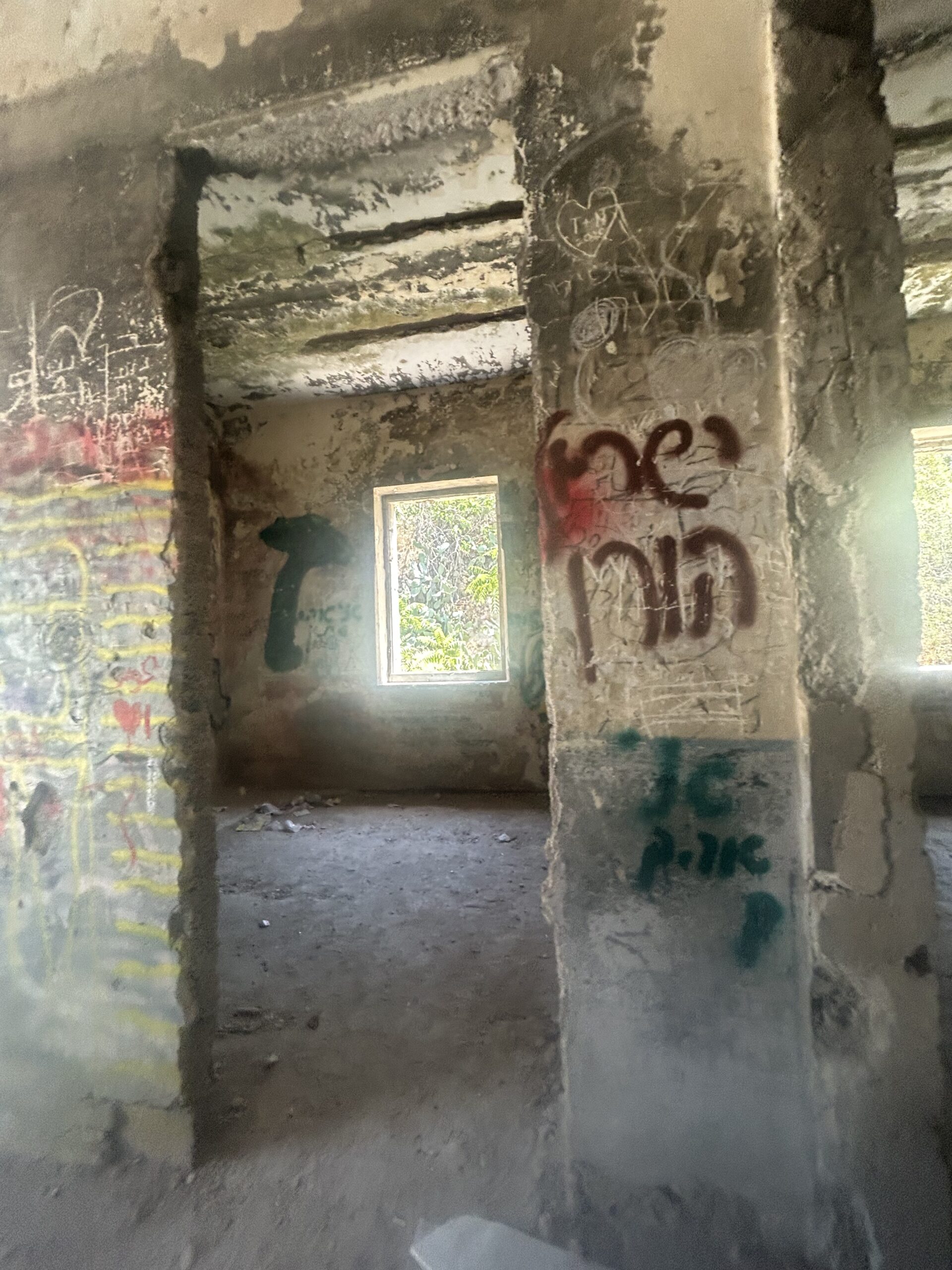
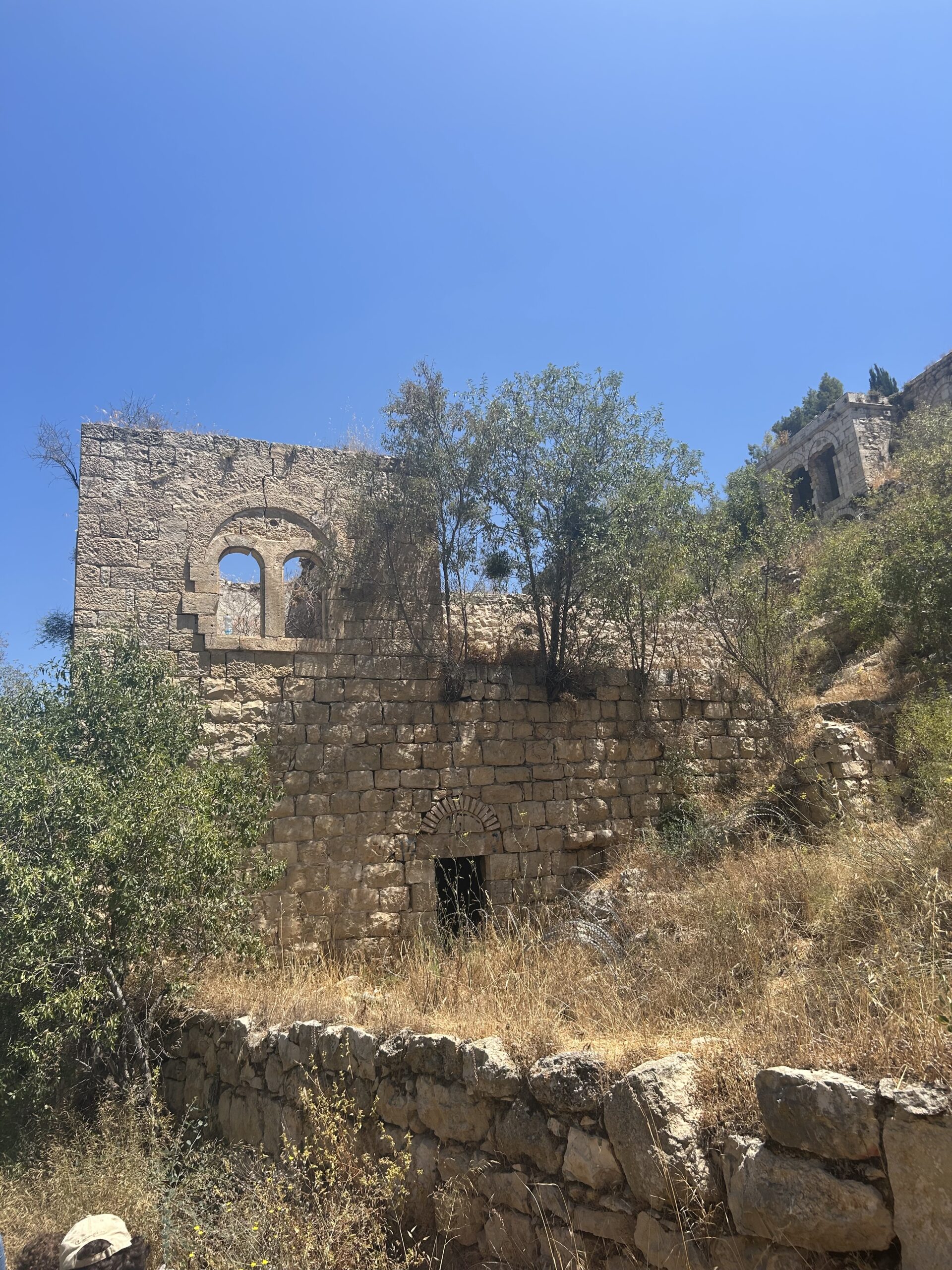
We took a tour of the abandoned Palestinian village of Liftah, which Jerusalem’s Central Bus Station overlooks. Although there are ruins of homes and a mosque, there is no signage on our path to indicate what we are looking at. Walking into the valley where Liftah stands alone, I saw groups of schoolchildren on field trips. These kids come to hike; we saw them swimming in what used to be the village’s water source. We were told that some communities use this water pool as a mikveh, a Jewish ritual bath. Unlike many of the destroyed villages and communities from 1948, the remains of Liftah still stand. Liftah is the catastrophe that we can still confront if we choose to open our eyes. For the majority of Palestinian communities, the state of Israel has systematically erased any remains of what was, building new neighborhoods on top of cleared-out rubble. In the Mamilla neighborhood in Jerusalem, Independence Park was built over part of the historic Islamic Ma’aman Allah Cemetery. When building the Museum of Tolerance, over the same cemetery, they uprooted thousands of graves. So there is a unique opportunity in Liftah to see this history; to imagine what was and reckon with the present. And to not is to turn away from what is right in front of you.
This summer we went to the village of Umm al-Khair two days a week to run a summer camp for the children of the village whose path to school has been blocked with razor wire put up by residents of the settlement of Carmel. We came on Wednesdays from Jerusalem, and each week, I feel uneasy knowing that while I have felt safe and comfortable, there has been ongoing violence. One week, we came to camp after the Israeli army destroyed one of the homes in the village, which I later learned belonged to one of the kids we saw regularly. She came to camp ready to jump rope. Here, the rights to education, safe drinking water, and shelter are gone. Settler attacks are commonplace. As we ran the camp, we were surrounded by Israeli flags that the settlers have placed within the village and on homes. This catastrophe is ongoing. And each day kids show up to camp ready to play and learn. The kindness of the community radiates. The older kids sit in the library ready to learn English before we have even set up. The little kids sit and color and become obsessed with our broken Arabic version of duck duck goose. They are patient with us since we don’t speak Arabic. They are sweet, wild, loyal, and stubborn.
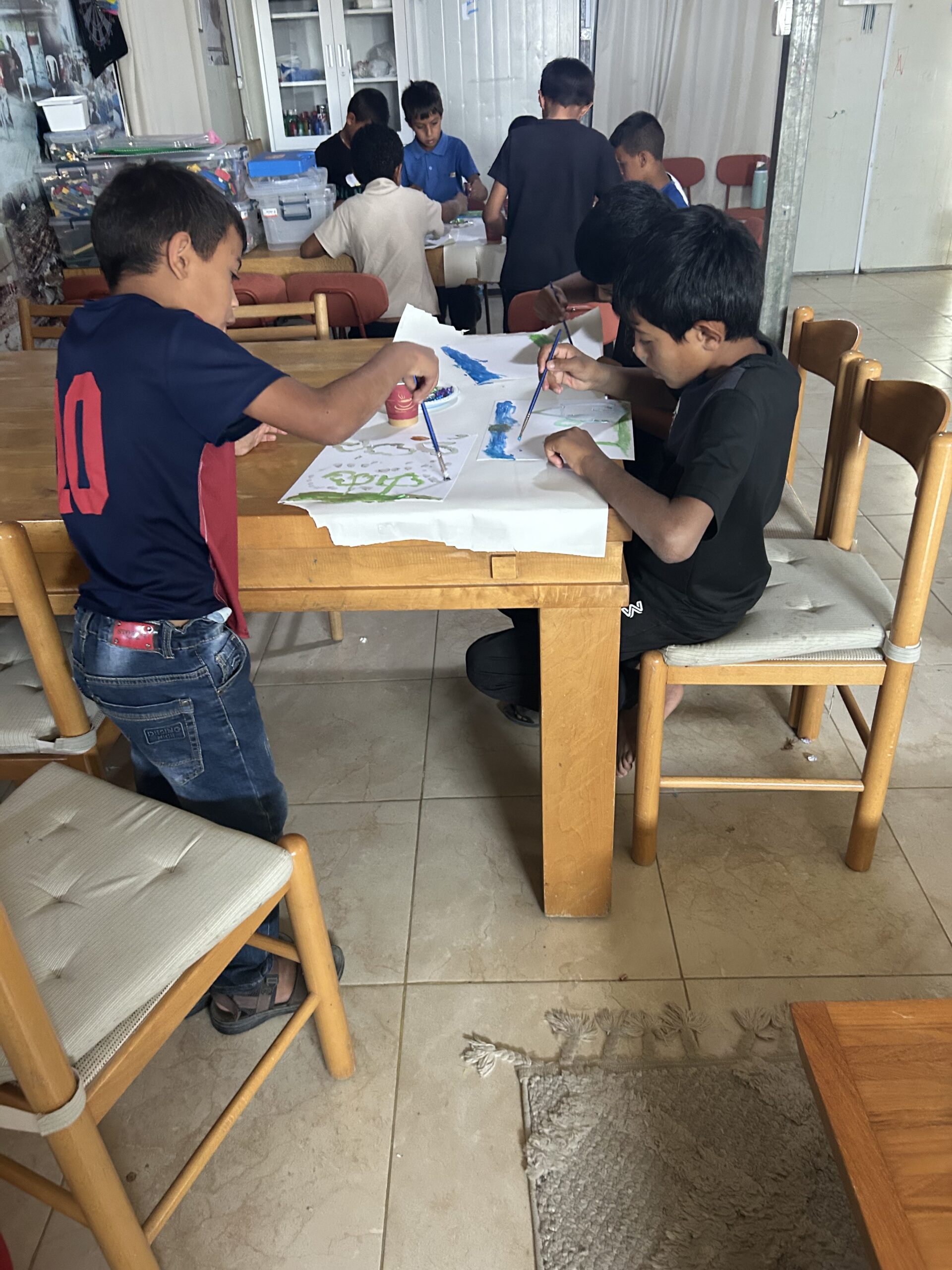
This is the place that holds multiplicity. The violence they experience is so deep, and yet there is so much laughter; singing; late-night barbeques; and nightly soccer games. It is sumud, steadfastness, resilience, and resistance.
איכה ישבה בדד העיר רבתי עם
How does a city sit alone that was full of people?
There is a constant state-sanctioned effort to have these villages sit alone and empty. To forcibly remove the residents to ensure Israeli expansion. There is an effort for us outside to forget and ignore the fullness and the light that is embedded in the communities. I am inspired by the capacity, in the communities we visited, to hold complexity. For Umm al-Khair to invite us into partnership, to welcome us to do Jewish ritual even when they see the same words weaponized for violence. Being on the ground this summer, I have a renewed hope that the Jewish community follows this lead and holds multiplicity. That we listen and witness what is happening to the Palestinian people and to understand that the fight for Palestinian liberation does not negate our own traditions and community. Our world is brighter when everyone has a right to thrive on their land.
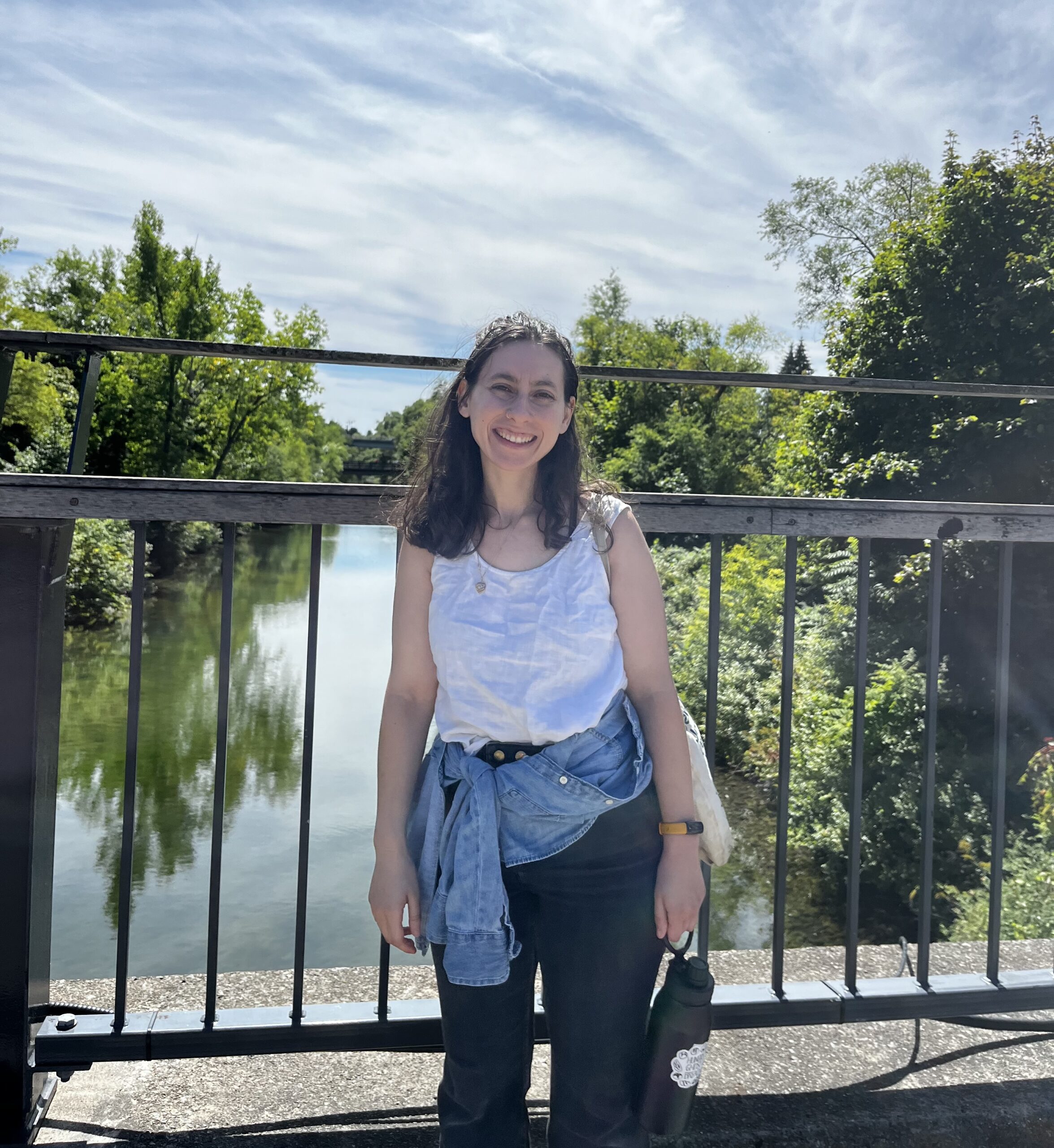
This summer Abby Allen received Partners’ Theodore Bikel Peace and Justice Internship. Abby is a fourth-year rabbinic student at the Jewish Theological Seminary.
Thank you for expressing recognition of the violence perpetrated by Israel on Palestine and Palestinians as wrong.
As a Jew, I am distraught, terrified and my heart aches as Israel, Israelis and some Jews around the world feel justified in attacking, destroying and treating Palestinian people as targets to be justifyingly destroyed and shut off the ‘land’. What have we, as Jews learned from our own history of being ‘vanished’ by the Holocaust. Striking back is never a solution….but unqualifyingly evil, immoral and wrong. Reaching out in dialogue, sharing, committed to understanding and living beside is the lesson to teach our kids. War is endless and there is no peace.