
KOLOT – Voices of Hope
Tech2Peace: Building a Young Cohort for Peace through Cross-Border High-Tech Collaboration
By Esty Shohat Rozenfeld and Adnan Jaber
The young generation is not the future of peace. They are the present infrastructure, and ignoring that is a political choice.
In 2015, the UN Security Council adopted Resolution 2250, recognizing young people as essential partners in peace and security. Ten years later, we are still struggling to treat that recognition as more than words. Over the past two years, waves of protest have emerged across the world calling for an end to the Israeli-Palestinian conflict. Young people are at the forefront, organizing, mobilizing, and demanding change. The scale of this movement reflects a deep gap between young people’s desire to take an active, meaningful role in ending the conflict and their near-total absence from the tables where decisions about its future are made. When institutional channels remain closed, the street becomes the primary remaining space for political participation.
UN Security Council Resolution 2250 sought to confront this gap directly. For the first time, an international framework named what had long been missing from peace efforts: young people as change- and decision-makers, not spectators. At its core, the resolution makes a simple but demanding claim: sustainable peace is impossible without the meaningful participation of youth in decisions that shape their lives, their communities, and their futures. It explicitly recognizes that today’s generation of youth is the largest the world has ever known and that, in many conflict-affected societies, young people constitute the majority of the population.
Founded in 2018 by Israeli and Palestinian educators and facilitators, the Tech2Peace NGO was created from the belief that young people should not inherit an ongoing conflict, but, instead, help shape a different future together. While the organization was not founded as a direct response to Resolution 2250, its approach reflects the same principles: meaningful participation, shared leadership, and long-term investment in young people as partners in peacebuilding.
Resolution 2250 is built around five interconnected pillars: participation, protection, prevention, partnership, and disengagement and reintegration. Together, they acknowledge a reality peace processes too often ignore: young people are not only affected by agreements signed in negotiation rooms, they are the ones who will be asked to live them, defend them, and carry them forward long after the signatures dry. The resolution recognizes that youth must be actively engaged in shaping lasting peace because they are the ones expected to convert peace agreements into lived reality. Responsibility, in this framework, cannot be imposed from above. It must be shared. Without real partnership, there is no ownership. And without ownership, there is no peace that lasts.
This is where Tech2Peace comes in. Tech2Peace is an Israeli-Palestinian organization that brings together young Israelis and Palestinians for long-term, intensive programs combining advanced technology training with sustained dialogue. Today, Tech2Peace is the only organization that focuses on bringing Israeli and Palestinian young adults into a sustained, cross-border, shared-society, peacebuilding framework based on joint learning, leadership, and professional collaboration. Our mission is to build a shared society by preparing a generation of young leaders who are equipped to work together across the two sides of this conflict.
Tech2Peace’s work begins with intensive seminars where young Israelis and Palestinians combine facilitated dialogue with technology training in fields such as software development, artificial intelligence, and entrepreneurship. But the seminars are only the starting point. Participants become part of a long-term alumni community that continues through leadership programs, mentorship, regional gatherings, hackathons, and joint initiatives, creating ongoing opportunities to collaborate across political and geographic divides.
We do this by integrating dialogue, technology, and entrepreneurship, treating each not as an end in itself but as a tool for building trust, shared problem-solving, and real interdependence. In practice, this means our programs are built around the core principles articulated in Resolution 2250: meaningful participation in decision-making, protection through resilience and community, prevention through access to opportunity, partnership through shared leadership, and disengagement from violence through reintegration into professional and civic life. Young people at Tech2Peace are expected to carry responsibility, make choices, and live with the outcomes of working together.
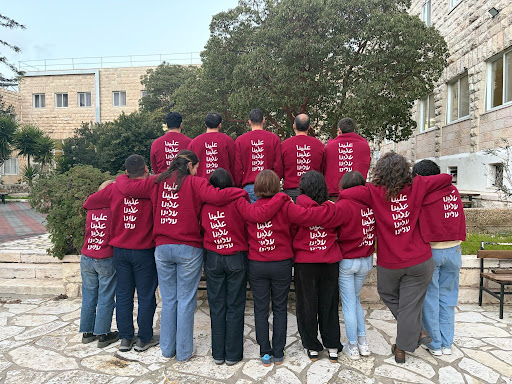
Tech2Peace staff retreat – January 2026
(Photo credit – Tech2Peace )
In Hebrew, we say Aleinu (עלינו). In Arabic, Aleina (علينا), meaning it’s up to us. They sound almost identical. Responsibility, spoken in two languages. And yet, for many young people, responsibility has long been something assigned rather than shared. Peace processes are negotiated by others, celebrated by others, and later explained to those expected to live with their consequences. Over time, this distance does something dangerous. It does not create apathy. It creates disengagement. When young people are not treated as partners, they stop believing that participation is even possible.
Peace will not be sustained by asking young people to wait their turn. It will not be secured by managing them as beneficiaries, or by training them to inherit decisions already made. It will only be sustained when we are willing to share power, risk, and responsibility with them now. The question is not whether young people are ready. It is whether we are ready to treat them as the partners they already are.
To learn more about Tech2Peace and its programs, visit their English-language website, or follow them on Instagram, YouTube, and LinkedIn.
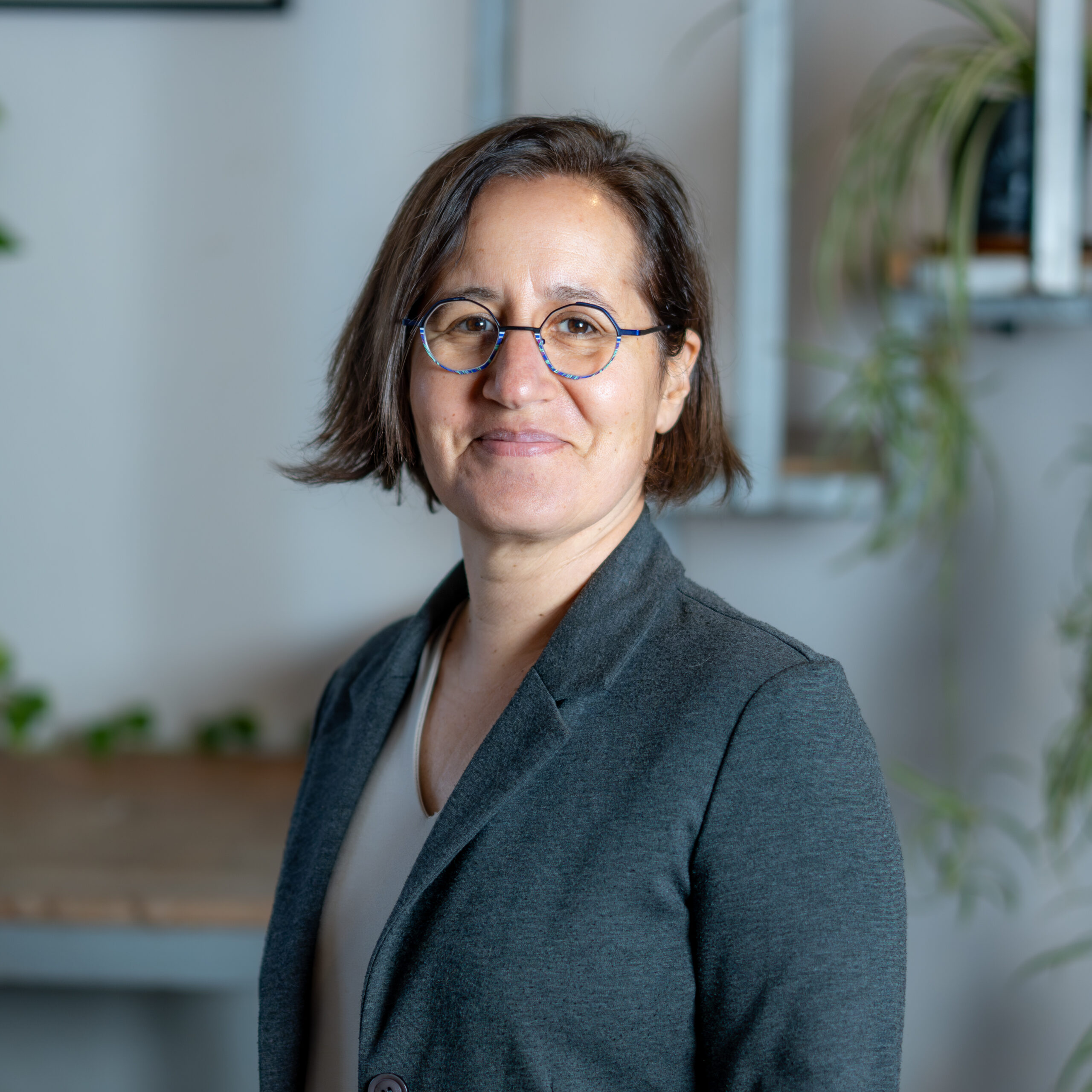
Esti Shohat Rozenfeld is the CEO of Tech2Peace.

Adnan Jaber is a member of the Tech2Peace board of directors.
Leave A Comment