
By Iky Salinas
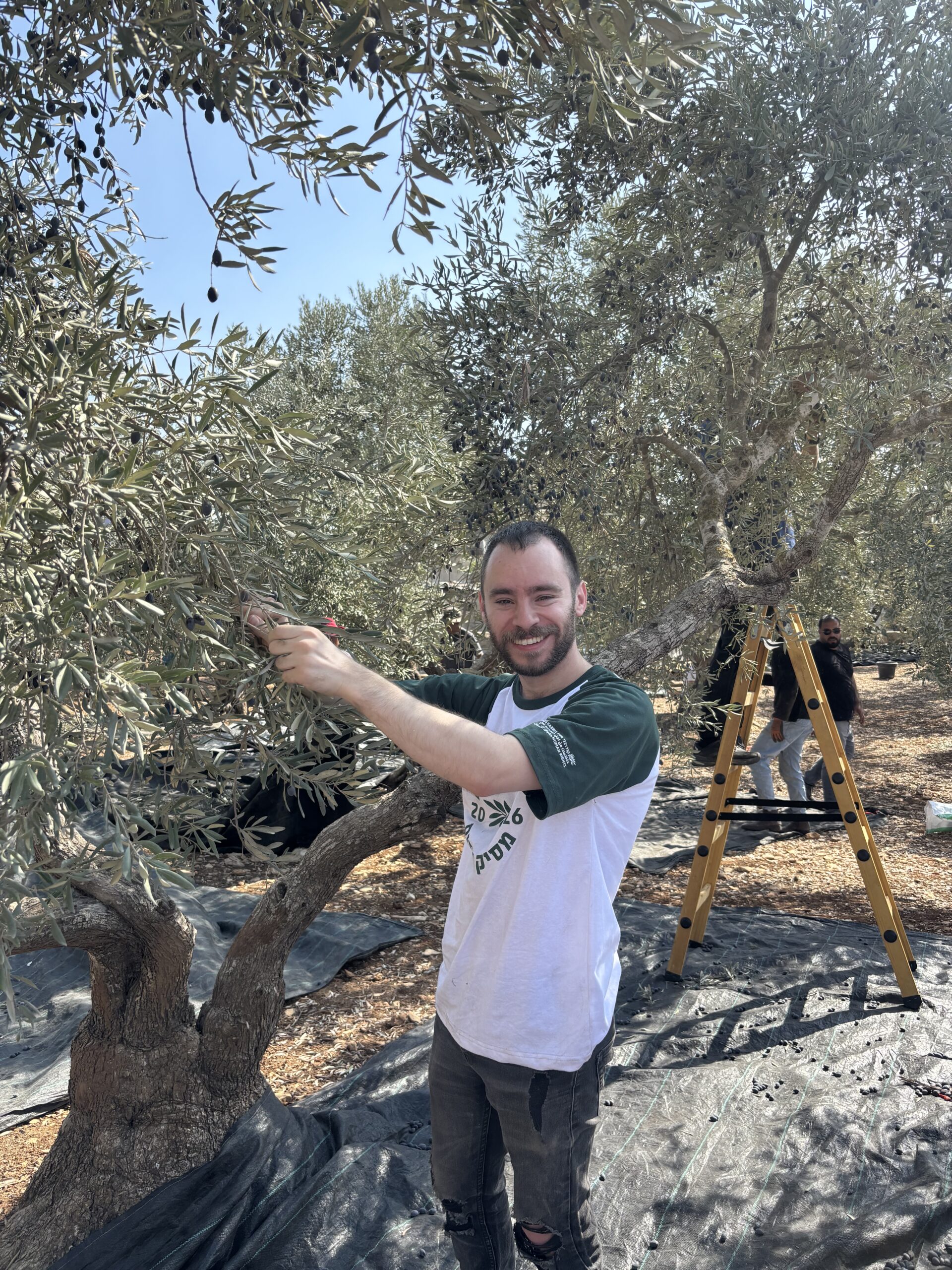
For the past week, I have been in Israel, where I had the opportunity to vote, engage with Israeli civil society, and participate in the Protect the Harvest initiative, supporting Palestinian farmers during the olive harvest.
The other day, I joined Palestinian farmers in Huwara, a town scarred by a major wave of settler violence in 2023 and continuing threats from settlers. During my visit, 30 Israeli and diaspora Jews joined local Palestinians to harvest thousands of olives, support the Palestinian economy, and put solidarity and partnership into practice. This was my second time participating in the olive harvest, but this experience offered a different perspective. The atmosphere was much calmer, with no Israeli presence beyond the activists who came to help. It was an opportunity to learn from local Palestinians about steadfastness, self-sufficiency, and the value of building partnerships across divides.
The Palestinian family we worked with showed us the settlements and outposts surrounding their land, including one they said had been established only recently. But they also showed us something else: their determination to continue living and working on their land. They spent six hours in the sun picking olives alongside us, then welcomed the volunteers with fresh-baked pita, olive oil, and pickled olives made from the produce of their own land.
There is something profound about maintaining your traditions and sharing your hospitality when your home, livelihood, and future are under threat. The olive harvest is not only an economic necessity. It is an expression of resilience, rootedness, and the determination to remain on one’s land despite the challenges.
I believe the same lessons apply to Israel’s political future. As ballots are counted and uncertainty remains about the country’s direction, Benjamin Netanyahu has already begun declaring victory. Yet the electoral picture is more complicated. His coalition has lost ground, creating an opportunity to move Israel toward a different political future, one grounded in democracy, equality, and social justice.
What I took away from Huwara is that realizing this opportunity will require the same three values I witnessed in the olive groves.
Steadfastness. Building a more democratic and just Israel requires a sustained commitment to liberal values, even when progress is slow and the obstacles seem overwhelming.
Self-sufficiency. Lasting change must come from within Israeli society. It requires people to recognize their own capacity to shape the future, organize their communities, and challenge the assumption that the current political reality is inevitable. The election results offer important proof that this is more tangible than many would have expected. The task now is to turn that potential into lasting political change.
Partnership. A different future will require Israelis and Palestinians to work together, including in ways that may once have seemed politically unimaginable. Within Israel that means accepting the legitimacy of Israel’s Palestinian Arab citizens and sitting with them in a democratic government committed to equality. In the region this means working with allies to sustain change and promote a more peaceful Middle East.
These values reflect our mission at Partners for Progressive Israel, we understand that our commitment to a durable and just peace in Israel and Palestine, and the Middle East as a whole, will only come through partnership, strong civil society, and a steadfast commitment to social justice.
The path ahead remains uncertain, but the possibility of change is real. What matters now is how we choose to build on it.
Leave A Comment