
INSIGHTS
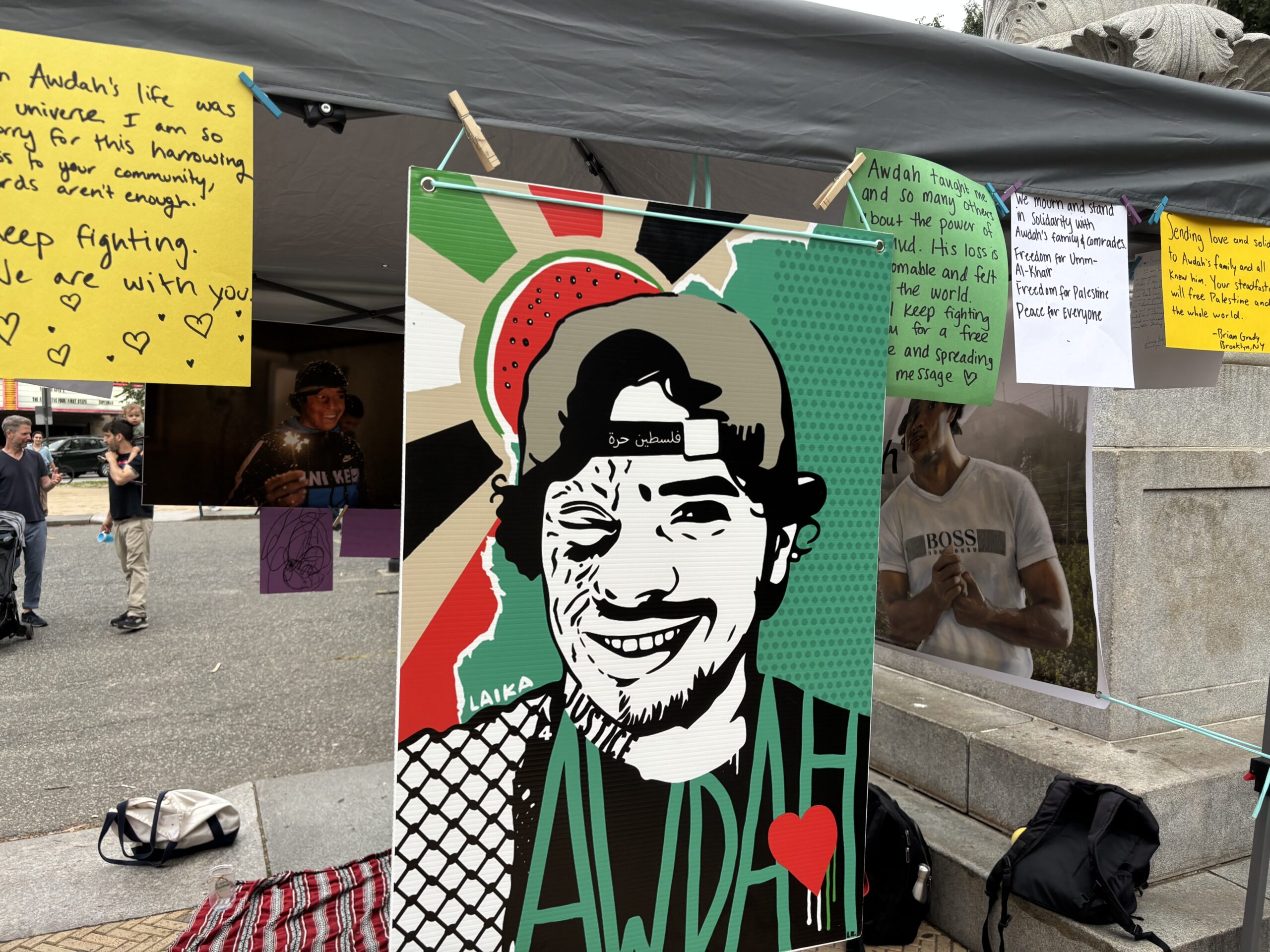
Remembering Awdah Hathaleen
By Maya Garfinkel, PPI 2025 Theodore Bikel Peace and Justice Intern
This piece was begun in late July of 2025, immediately following the murder of Palestinian activist and educator Awda Hathaleen. Awda was shot at close range near his home in Umm al Kheir in Masafer Yatta, in the West Bank, by the settler Yinon Levi. As of publishing, Levi walks free.
I last saw him two months ago, to the day. It was the last Monday of May and I was saying goodbye to the whole family, even if the babies didn’t understand yet. I was squeeze-hugging his wife and murmuring “see you laters” and “inshallahs” when he came up and asked if I was leaving. I hated to tell him yes, I was leaving. I knew I would get some shit for it, served with a trademarked smile. But I would be back soon, inshallah. He replied, inshallah and thank you. It was crazy to thank me. My contribution to his life had largely been sitting with his wife and wife’s friends, drinking his tea, and playing with his three sons while they wreaked havoc in his small home. But that was Awdah. Thanking and blessing and loving the people around him, making his home a home to all even (and especially) when the powers around him never stopped telling him his home was not his own.
My friends and I have a game we play, in which we try to label each other and others with an adjective and an occupation: tender, feral, lonesome, or realistic; scientist, cowboy, wizard, or merchant. We would joke in Jerusalem and on the way back from days with the Storytellers Project in Masafer Yatta that Awdah was the “archetypical merchant.” He was the perfect example because anyone who knew Awdah would understand that the “merchant” wasn’t just a powerful social engineer or clever powerbroker – the merchant could be a good, kindhearted person because of the way that man was in the world.
He would fight tooth and nail for you to show up to his Iftar, or in forging new connections with unexpected allies using biting, ruthless humor and tireless communication. It was manifest watching Awdah parenting his children with understanding and a youthful giggle, or in seeing him blushing at his 31st birthday party before giving a heartfelt speech.
We saw his nature as he worked at strained relationships because of an unshakable faith in human connection – even when faith in the future was shaken; and in the goodbye send-off for solidarity activists that included a (very serious, yet silly) Arabic pop-quiz.
Awdah invited people in, in such a way that made it seem like the most natural thing in the world. He did this despite the reality that, a friend put it, “this isn’t supposed to happen.” Foreigners and Israelis aren’t “supposed” to be meeting and living with Palestinians in their homes, breaking bread, feeding each other’s children, defending the land, harvesting olives, and feeling feelings together. But it was natural in Awdah’s world. He seemed invincible to me. May his memory be for a blessing.
On Monday, July 28th, he was shot by a settler on the upper right side of his chest while standing in the courtyard of the village’s community center. The people around him tried to save his life, and he was transported to the hospital to critical care. He died of his wounds a few hours later. In the same attack that left Awdah dead, many of his community members in Masafer Yatta were arrested, and one was seriously injured by construction machinery.
Awdah is survived by his wife and three young, sweet sons – all under age 6. As of today, his body is still being held by Israel. For more than a week after Awdah’s passing, more than 70 women, ranging in age from 13 to over 70, from the village of Umm al-Kheir, decided to begin a hunger strike immediately, demanding the return of his body. The women declared that they would continue the hunger strike until his body is returned, so that he may be buried in the village and his family can accompany him on his final journey. The hunger strike also served as a protest against the ongoing detention of the six residents of the village who were held in jail following the settler violence against Um al-Khair. After ten difficult days, Awdah’s body was returned to his family, and laid to rest.
Just after his death, I gathered with other friends of Awdah’s in a basement in Crown Heights in New York City. I just happened to be passing through the city, and was grateful to share space and grief with those who knew him. In that basement, I was surrounded by individuals who had kept up the fight for non-violent resistance and liberation in some part due to him. In a way, his legacy is invincible even as his life has been cut so short so brutally.
One of these friends was Elly, an Achvat Amim staff member and friend. Sitting in that basement, I was listening to folks recount stories of Awdah from the last decade of his short life and was reminded of the last workshop that Elly facilitated for the Achvat cohort. It was about political imagination and storytelling – two of Awdah’s gift’s. A few days after I said goodbye to Awdah, his family and other friends who live in Umm Al Kheir and Masafer Yatta at large, Elly instructed me and my friends to take twenty or thirty minutes and write some sort of piece imagining a future on the land. I’ve been wanting to share it here for a while and couldn’t find the right time. Now, with a heavy, heavy heart, it feels right:
When I arrive at Safta’s house, the smell hits me first, as it always does. It’s chicken soup, and homemade wine, and cheap fabric softener, and old drugstore lipstick. I knock on her door with my bag slung over one shoulder and fresh burekas in a paper box in my free hand. She opens the door and her face breaks into the sweet, youthful smile she always has when we reunite. “Ahh, Maya” – perpetually surprised that I actually arrived. I kiss her on the cheek and we settle in together. My trip to visit isn’t long, but there are a few special people I want to see. Safta, of course, is first on the list. As we sit down for coffee, tea, and cake, she asks me what my plans are. I tell her and we scheme over the background sound of the 5pm news.
We wake up promptly at 6:30 the next morning. Well, I wake up at 6:30 with my phone alarm and Safta wakes up an hour earlier with no alarm, shuffling about and reading. We put on our sensible one piece bathing suits and summer dresses and get into her little beat up car. I put on Waze, but Safta directs me the whole way anyways. In classic Safta fashion she has adjusted to the new street names and neighborhoods in her area over the last few years. We’ve always gravitated towards talking about languages, and she shows off her Arabic reading skills after I probe her – a 5th language now in her repertoire. We pull into the handicap spot at the women’s section of the beach and I help her out. She takes my arm in the way she does.
It took her a bit to get used to seeing more hijabi women at her regular spots, but the shock was softened by the implementation of optional women’s only sections of swimming. She loves calm water without splashing, and it felt calmer and sweet to be in that section now. We find a spot in the shade and set ourselves up plus a few extra spots. Soon enough, the rest of our gang arrives.
H waves from the parking lot, baby girl by her side and helps her own mother out of the car. She always wanted to be a mother to a girl, and six months ago her wish was granted. She approaches us and I run over to help her mom make it safely to the chair with her bad knee. H runs back to the car to collect the absurd amount of hot tea in plastic thermoses and sweet knafeh she brought from Yatta for us to try “even if it’s not perfectly fresh” she insists. It only added a few extra minutes to her drive to the northern beach we were on – not the impossible journey it would’ve been when we first met. She gives Safta three kisses on the cheek and they both beam. Soon enough, Safta and H’s mom are yapping away about doctors and stretches for H’s knee. My Safta recommends she visit my doctor cousin at the hospital in Yaffa, of course. She reminds H of the fact that she’d be happy to call him and help her get an appointment whenever she had the chance to take the train in from Yatta. I stop to breathe between bites of my sticky knafeh breakfast, and shout with delight when I notice more smiling faces in the parking lot. S and the girls! I could hear them before I saw them and was relieved they beat the morning traffic from Al-Quds where they were staying with family. S’s oldest, Maryum, is so big now. After a hug, she plops down at Safta’s feet and immediately starts pestering with questions from her honors European history class in a combination of English and Hebrew. S and H just laugh and embrace, taking off their hijab and feeling the sea breeze whip their hair. Nour, S’s second, is still young enough to want to jump into the sea but has to use her younger sister as an excuse. “Yara really wants to go in.” I sigh and tell her “yalla, but with Safta. I need your big girl strength to help her walk to the water.”
We each take one of Safta’s hands while the others help H’s mom. A motley crew of giggles hobbles over to the lapping sea, al bahar, ha yam. Our toes hit the water. We squeal. I laugh. We’re here.
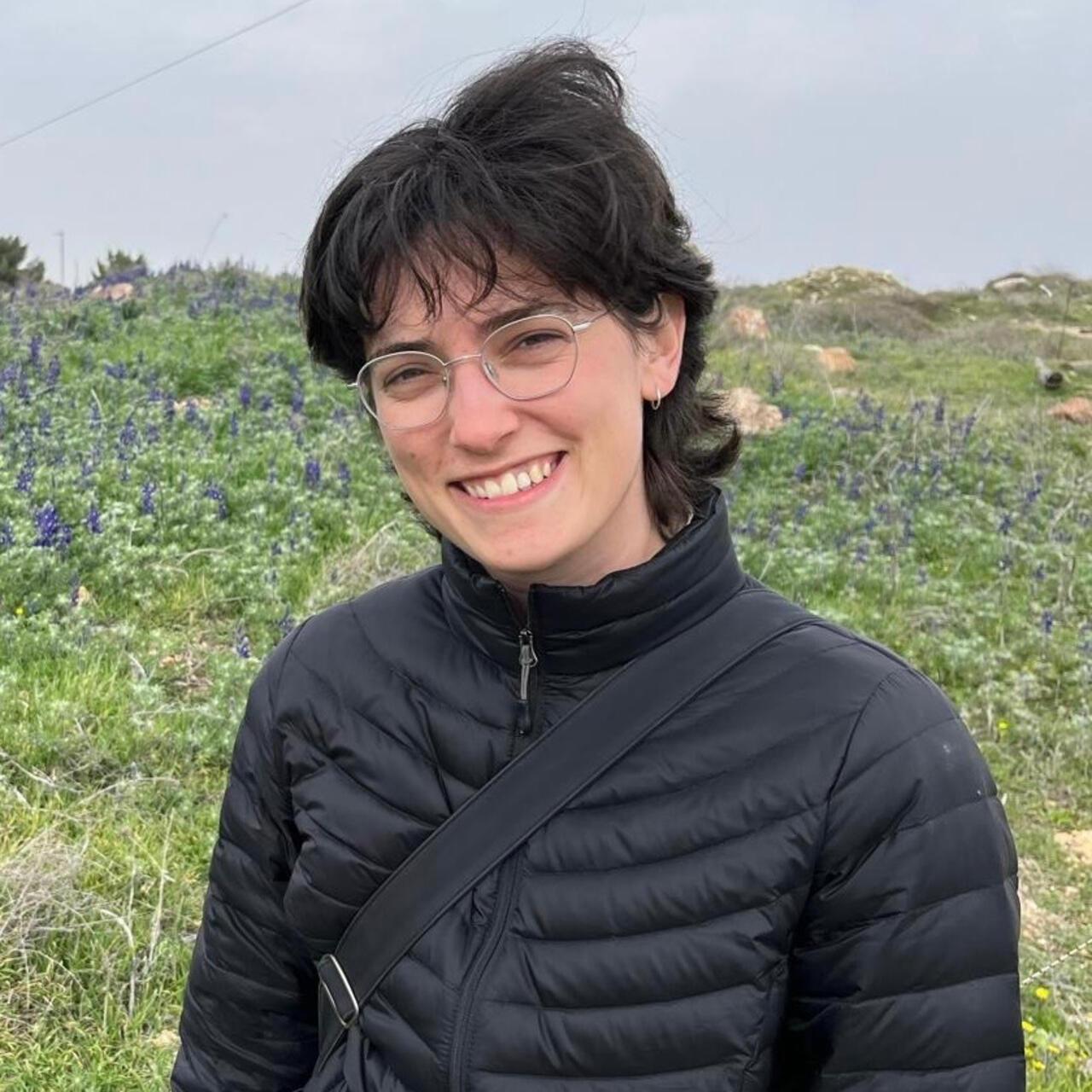
Maya Garfinkel served this spring as Partners’ Theo Bikel Peace and Justice Intern. This year she completed a semester at Achvat Amim: Solidarity of Nations, where she served with Rabbis for Human Rights and the Storytelling Project in the South Hebron Hills.
Leave A Comment