
INSIGHTS
“Let Us Continue”
By Joseph Hillyard
As a student of history I have often looked to the past to make sense of our frightening present. Recently I’ve been reading historian Doris Kearns Goodwin’s phenomenal memoir An Unfinished Love Story: A Personal History of the Sixties. In it, she recounts her and her future husband Richard “Dick” Goodwin’s time working for President Lyndon B. Johnson, and President John F. and Robert Kennedy, respectively, against the backdrop of the Civil Rights Movement, the euphoria of the Great Society, followed by the chaos of Vietnam.
In light of recent developments in Israel-Palestine, I have been thinking especially of LBJ’s address to congress after the shock and trauma of JFK’s assassination. The speech, titled “Let Us Continue,” both pays tribute to the slain President and demands that we honor his legacy by following through with his priorities; quality education for all, healthcare for the elderly and most importantly comprehensive civil rights legislation. This is my attempt to channel that speech to fit our current moment:
I wish I didn’t have to write this speech. Those on the ground and in the diaspora have been forced to live with the emotional, physical and deeply personal scars of the largest killing of Jews since the Holocaust and the most horrific period for Palestinians since the Nakba. Two years of death and destruction wrought upon the people of Israel and Palestine, preceded by 50 years of occupation of the West Bank and Gaza, the mainstreaming of Kahanism in Israel and leaders on both sides of the green line viewing their own people as collateral damage for their own political machinations. The memory of the deceased; men, women, children, doctors, lawyers, students, peace activists, friends, parents, grandparents and so on, live on in the hearts of all those who knew them. No words are sad enough to express our sense of loss. And no words are strong enough to express our determination that such horrors never be allowed to happen again.
The dream of a Palestine that is free, democratic and unoccupied that has been conjured by generations of Palestinians even through immense tragedy. The dream of an Israel that no longer occupies another people’s land and commits to its founding Jewish and democratic values. A future where children in Gaza don’t starve or lose their limbs due to indiscriminate bombing, where families in the West Bank aren’t murdered by settlers and families in Israel don’t have to beg their own government to prioritize the safety of their loved ones over political machinations to escape accountability. A future where diaspora supporters of both “sides” and leaders on the ground invest in the well-being of their own citizens, not endless warfare. A future where we realize that war crimes committed in the name of Jewish safety or Palestinian liberation will achieve neither. These dreams and many others have been kept alive by the drive and dedication of generations of struggle. And now these ideals must and will be translated into effective action.
As a writer, I am haunted by the words of Palestinians and Israelis that I have encountered over the last two years. Descriptions of families constantly fleeing from place to place because of airstrikes or settler terrorism. Relatives of the deceased demanding that their loved ones’ memory not be used as justification for even more brutality. Obituaries for filmmakers, writers and journalists killed by bombs, terrorists and settlers.
A year before her murder, Vivian Silver said in an interview: “I call myself a conditional Zionist,” she explained. “I believe in the right of the Jewish people to have a state, as long as we give the same right to the Palestinian people. This could be such a haven to both of our people here.” In honor of her I have embraced this label as my own and carried these values with me. In reading the works of Palestinian writers, I am reminded that these horrific realities have in time, become depressingly normal. As activist Hamze Awawde wrote in an essay about Palestinian life in the West Bank: “The neighborhoods we live in are heavily monitored and controlled by Israeli armed forces as well as by the Palestinian Authority – whose primary concerns are its own interests and wellbeing. We are stuck in a kind of suspended animation. Life does not move forward.” Allowing this unequal reality to continue is a moral and political stain on us all.
Since the announcement of the ceasefire I’ve seen some frame this development as a ‘new beginning’ and ‘new era,’ in the Israeli-Palestinian conflict. A more useful framing, at this moment of renewed resolve, I would say, let us continue. Let us continue to support civil society organizations who have long been fighting for the shared liberation of Jews and Palestinians. Let us build upon the New York Declaration to demand that all governments recognize Palestine and finally treat Palestinian national aspirations with seriousness. Let us continue to demand accountability for decades of occupation and for the war crimes committed by Hamas on October 7th and Israel’s response in Gaza, which human rights organizations have stated amount to genocide.
As President Johnson wrote,
We meet in grief, but let us also meet in renewed dedication and renewed vigor. Let us meet in action, in tolerance, and in mutual understanding.
We must allow our communities space to mourn and process the trauma of the last two years, which have only been compounded by the waves of antisemitism and Islamophobia that become normalized across the world. We must challenge and empower the democratic camp in Israel to realize its potential as a movement for freedom, democracy and human rights for both Israelis and Palestinians. We must not mute our opposition to the occupation. We must demand better from our progressive allies to not reduce the complex peoples of this land to slogans and symbolism. As hostages return from captivity, Palestinian prisoners are released and Gazans navigate their new lives amidst the rubble, let us reaffirm the value of all human life on both sides of the green line.
I profoundly hope that the tragedy and torment of these terrible two years will help bring us closer together in new fellowship, and make us realize that our fates are truly intertwined.
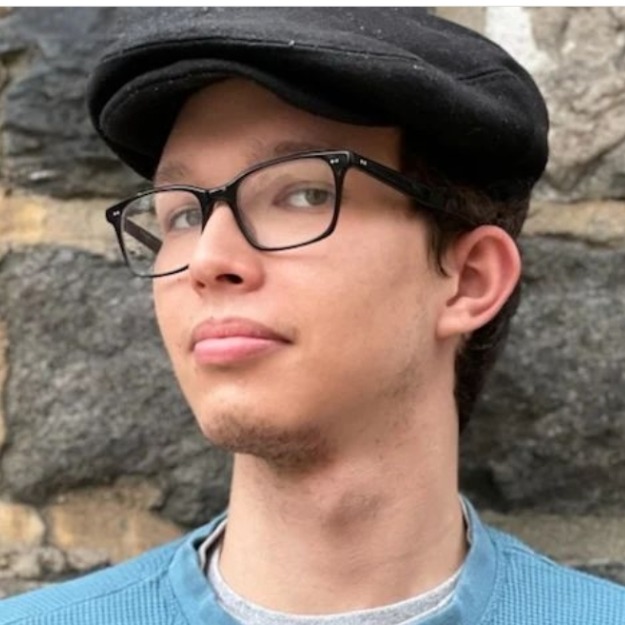
Joseph Hillyard is a Dramatic Writing Major and History Minor studying at NYU (2026). He is currently serving as VP for the Mid-Atlantic on the national board of J Street U, and was proud to be a member of the Hatikvah Slate for the 2025 World Zionist Congress Elections.
Leave A Comment