
FROM OUR MOVEMENT
Renew, Include, Build: The Challenges of Progressive Zionism
By Mariana Temido Cohen, Secretary General of the Union of Progressive Zionists
The 2025 Zionist Congress took place in Jerusalem in October. It was an enormous event, and the investment required to make it happen was proportional to its scale.
The question that remains for me is: what happens, and how proportional is the investment that world unions make in each of their diaspora communities during the four years in which the Congress does not take place?
The rules of the Zionist Congress have changed. What was once a body in which, many times, the representation of world unions was resolved through agreements within each country is now defined by intense elections held in nearly 30 countries during 2025.
The entry of the far right into these elections shifted the entire structure, and 2025 was marked by disputes and by efforts to explain and make the elections relevant and meaningful to voters.
The vast majority of Jews around the world do not fully understand the role of the World Zionist Organization nor how much it can influence their lives.
Now, with the goal of involving more people and allocating resources effectively in places where we can truly transform structures, it is our responsibility—as the UPZ (Union of Progressive Zionists, formerly the World Union of Meretz)—to make a difference: to connect the results of the Congress, held every five years, with people’s everyday lives.
There is a reason why so many people do not understand the details of the Congress, the formation of the World Zionist Organization, and the electoral rules in their countries.
The entire structure is complex and written in legal language, not by accident, but with the intention of limiting access to information and preventing more people from participating in the political system to which we belong.
Our duty is to understand the rules of the game we are playing and to democratize that information, occupying the space of the WZO.
In 2025, we learned how to run elections based on its constitution and, likewise, how to conduct ourselves within the Congress. Becoming familiar with this language is extremely important.
Helping our voters understand where their vote goes is part of this process: being able to explain where our resources are directed, what it means to have representation within the Zionist Federation in each country, and how a vote for the UPZ truly influences the life of any Jew anywhere in the world.
In 2020, the UPZ held 24 mandates (18 in the diaspora and 6 in Israel), and in 2025, I can say that after much work alongside each community and attending to their needs, we achieved—together with thousands of voters—29 mandates (23 in the diaspora and 3 in Israel).
Our electoral result represents a historic milestone within world Zionist politics—and also within Israeli politics.
The results in the Congress were exceptional: we managed to approve all the resolutions that were relevant to us and to prevent the far right from approving theirs, which only cause harm to Israel.
The election results were spectacular for us, and they can be even better.
Over the last year, we saw that there is enormous potential for growth.
The main question now is: who will the UPZ be from now until the next Congress, five years from now?
As the UPZ, we have the responsibility to build and strengthen a narrative within our communities, so that people like us have a place—a space of belonging and activism—in tune with their beliefs about Zionism, Judaism, and politics in general.
We need to be the space that publishes news and opinions about Israel, while at the same time understanding the complexity the country faces today, beyond hasbara work.
We must be the institution to which people turn to read information that usually does not reach them because it is not translated from Hebrew—and that enables them to connect with Israel, to criticize, and to know that there are spaces to transform what is happening in practice.
Beyond that, we must incorporate diversity into the voices within the WZO: people beyond the conventional ones, beyond those who have represented our Jewish communities over the last decade and who do not want others to transform communal politics.
At this Congress, we had a delegation composed of 46% women and also a significant number of young people, with the intention of bringing new voices into the WZO.
We must continue working to empower youth and ensure that debate within the Zionist world is no longer exclusively male, white, and privileged. That time has long passed.
Over the next five years, our work will be to create and strengthen adult communities based on the ideas of progressive Zionism and humanistic Judaism, with a left-wing political perspective.
To create communities in which people with this identity feel they have a home, their own space.
We want to offer our communities spaces where they can celebrate their complex Jewish identity, where we can celebrate our Judaism with a perspective centered on human beings, on community, and on the changes they want to see in the world.
We take on the responsibility of creating spaces for connection with Israel and with progressive Zionism within the community: spaces for political debate, Hebrew learning, celebration, and knowledge of Israeli culture—its authors, cuisine, and cinema.
Today we are in the process of continuing to strengthen our structures, which proved essential for each Jewish community during the elections, and we want to increasingly understand what is missing in each city and how we can create the home of progressive Zionism.
We invite you to stay in touch with us to make this possible.
לא עייפי דרך כי אם מפלסי נתיב
Not those who tire along the way, but those who pave new paths.
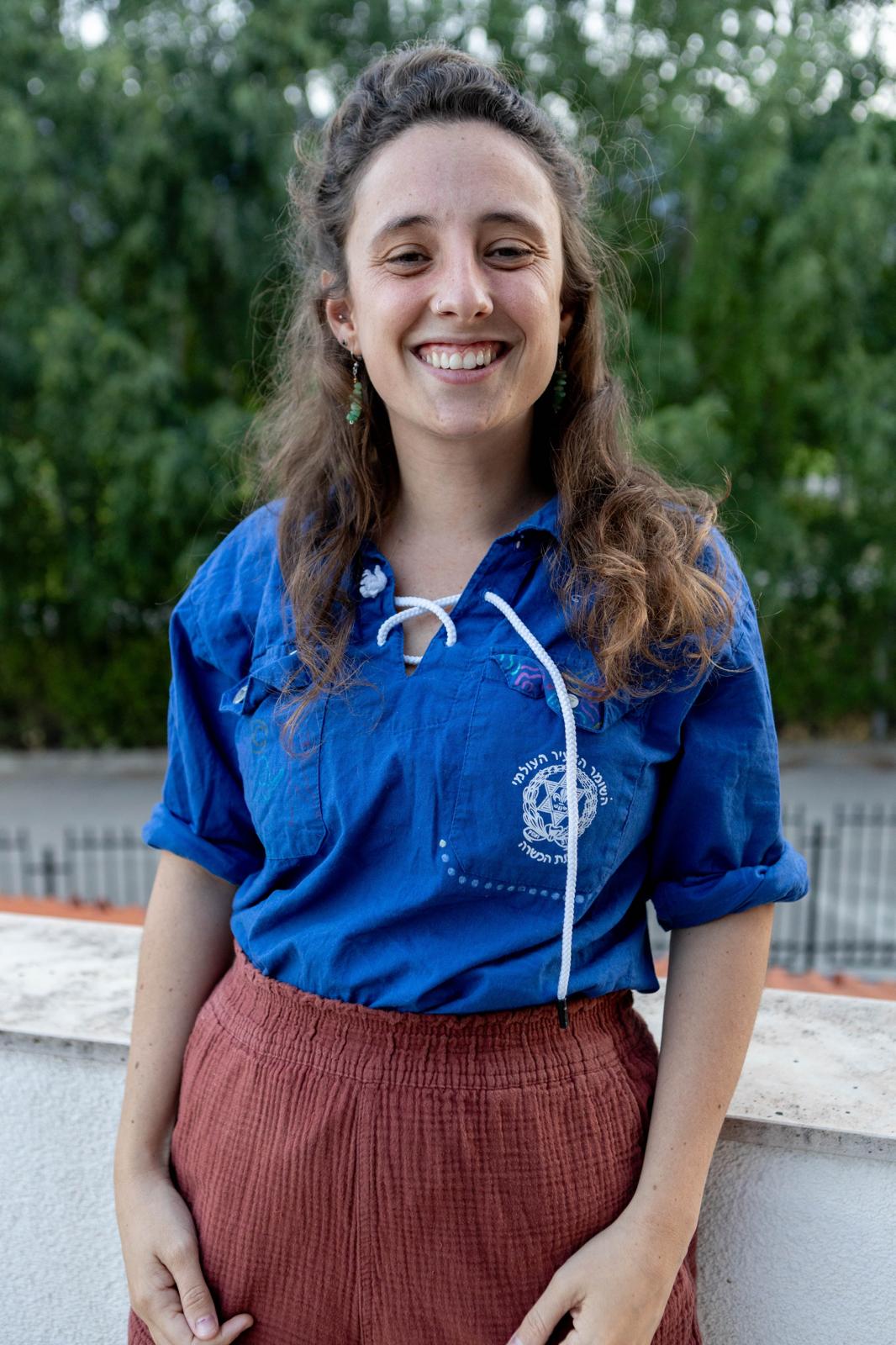
Mariana Temido Cohen was born in Rio de Janeiro and holds a law degree from Rio de Janeiro. She completed a master’s degree in Public Policy and Economics at Tel Aviv University. A member of Hashomer Hatzair since the age of eight, she made Aliyah five years ago and now lives in Israel. She is active in global Hashomer Hatzair and UPZ leadership spaces and was recently elected Secretary General.
Leave A Comment